


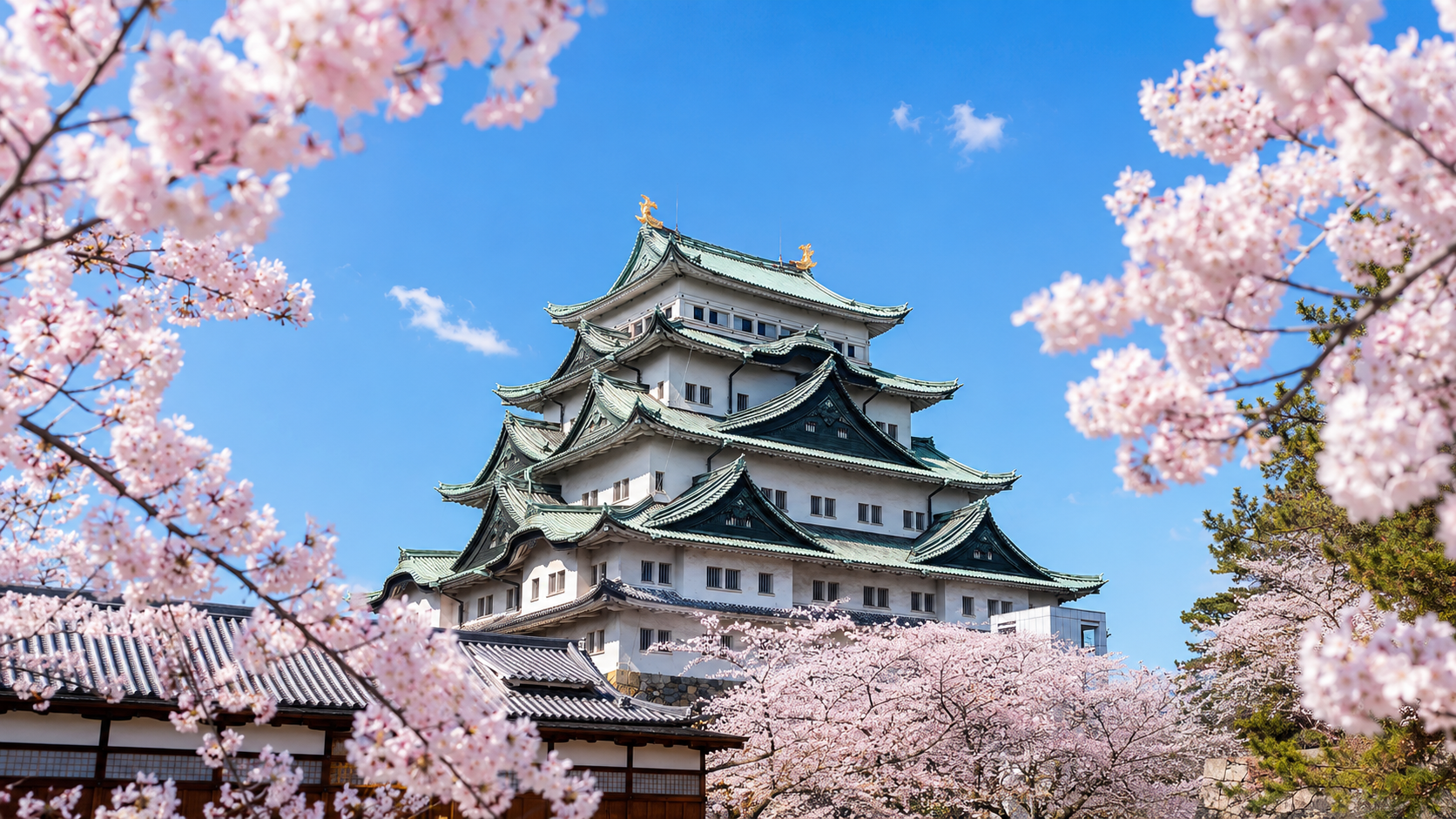


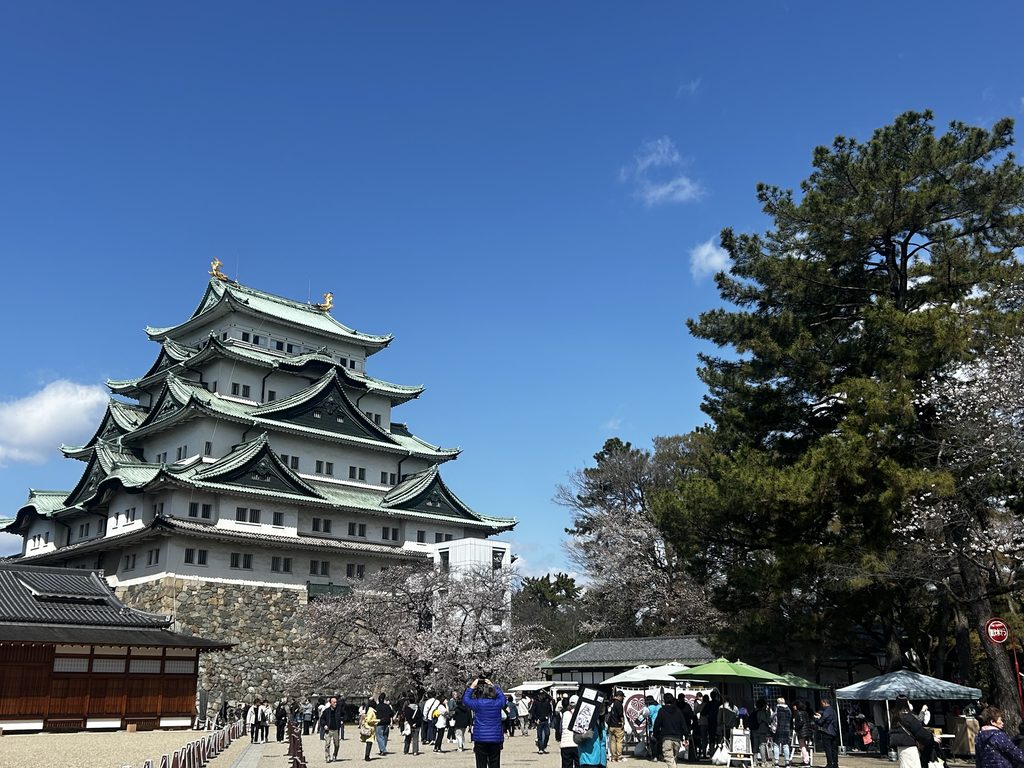
When you visit a castle in Japan, you probably expect to see stone walls, beautiful architecture, and plenty of history.
But at Nagoya Castle, you might encounter something a little more unexpected.
Samurai.
And not just people walking around in simple costumes.
Nagoya Castle is home to the Nagoya Omotenashi Bushotai, a team of famous samurai warriors brought to life to welcome visitors and share the history and culture of Nagoya.
If you’re visiting Nagoya, this is one of those experiences that makes the city a little different from other destinations in Japan.
Who Are the Nagoya Omotenashi Bushotai?
The Nagoya Omotenashi Bushotai represents six famous warriors with strong connections to Nagoya and the surrounding region:
- Oda Nobunaga 織田 信長
- Toyotomi Hideyoshi 豊臣 秀吉
- Tokugawa Ieyasu 徳川 家康
- Maeda Toshiie 前田 利家
- Kato Kiyomasa 加藤 清正
- Maeda Keiji 前田 慶次
- Tasuke 太助
- Touma 踏踊
- Jyugo 十吾
- Natu なつ
They are joined by attendants and regularly welcome visitors at Nagoya Castle.
Their main role is to promote tourism in Nagoya, but they don’t simply stand around waiting for photographs. They interact with visitors, talk about history and perform at the castle and events around Japan.
For international visitors, it can be a fun introduction to some of the most famous names from Japan’s Sengoku, or Warring States, period.
Yes, You Can Actually Meet Them at Nagoya Castle
This is the part many international visitors may not know.
The Bushotai regularly appear at Nagoya Castle.
According to their official website, members of the team provide omotenashi — Japanese-style hospitality — at the castle every day, although schedules can change when they attend outside events.
You won’t necessarily find every samurai there at the same time.
Different members appear on different days.
So if there is a particular warrior you want to meet, check the schedule before you go.
Check the official Nagoya Omotenashi Bushotai schedule
https://busho-tai.jp/schedule/index.phpDon’t Miss the Samurai Performance
On selected days, the Bushotai also perform an Omotenashi Enbu, or samurai performance.
These performances can include dramatic introductions, sword action and performances inspired by Japan’s samurai history.
The schedule changes depending on the season and events.
This is why I wouldn’t recommend simply arriving at the castle and hoping to catch a performance.
Check the official schedule first.
It could make a big difference to your visit.


Why Nagoya and Samurai Are So Closely Connected
There’s a good reason Nagoya has its own samurai team.
A remarkable number of Japan’s most famous warriors have connections to this region.
Oda Nobunaga, Toyotomi Hideyoshi and Tokugawa Ieyasu — often called Japan’s three great unifiers — all have strong ties to present-day Aichi Prefecture.
Nagoya Castle itself was built under the orders of Tokugawa Ieyasu and completed in 1615.
Its famous golden shachihoko — the golden tiger-fish ornaments on the roof — remain one of Nagoya’s best-known symbols.
So meeting samurai here isn’t completely random.
Nagoya is right in the heart of samurai country.
A Little Tip From Japan
If you’re visiting Nagoya Castle mainly to see the castle itself, seeing the Bushotai can feel like a nice bonus.
But if you’re interested in samurai, I’d do the opposite.
Check the Bushotai schedule first, then decide when to visit Nagoya Castle.
On some days there may only be a couple of members at the castle, while on other days several warriors and attendants appear and a performance may also be scheduled.
That’s the kind of small bit of planning that can turn a normal castle visit into a much more memorable experience.
Visiting Nagoya Castle
Nagoya Castle is generally open from 9:00 a.m. to 4:30 p.m., with entry to the castle grounds until 4:00 p.m.
The castle is normally closed from December 29 through January 1.
One important thing to know before visiting: the main castle tower keep is currently closed to visitors.
You can still visit the castle grounds and attractions including the magnificent Hommaru Palace.
Nagoya Castle Official Website – Visitor Information
One More Reason to Visit Nagoya
Tokyo has its neon streets.
Kyoto has its temples.
Osaka has its food.
And Nagoya?
Well, you can walk into a castle and meet Oda Nobunaga.
That’s pretty hard to beat.
If you’re interested in Japanese history — or just want to experience something a little different from the usual tourist attractions — try to catch the Nagoya Omotenashi Bushotai during your visit.
It’s one of those uniquely Nagoya experiences that you might not discover from a typical Japan itinerary.
Getting to Nagoya Is Easier Than You Might Think
If you’re already planning to visit Tokyo, Kyoto, or Osaka, adding Nagoya to your itinerary is surprisingly easy.
Nagoya is located directly on the Tokaido Shinkansen line, between Tokyo and Kyoto.
Typical travel times on the fastest Nozomi services are approximately:
- Tokyo to Nagoya: about 1 hour 40 minutes
- Kyoto to Nagoya: about 35 minutes
- Shin-Osaka to Nagoya: about 50 minutes
Travel times can vary slightly depending on the train.
This is one of Nagoya’s biggest advantages for international travelers.
If you’re traveling from Tokyo to Kyoto or Osaka, you’re passing through Nagoya anyway.
So rather than thinking of Nagoya as a completely separate destination, you could simply stop here along the way.
Spend the morning meeting samurai at Nagoya Castle, enjoy some local Nagoya food for lunch, explore another part of the city, and continue to Kyoto or Osaka later in the day.
How to Get From Nagoya Station to Nagoya Castle
Once you arrive at Nagoya Station, Nagoya Castle is easy to reach by subway.
A convenient route is:
Nagoya Station
↓ Sakura-dori Line
Hisaya-odori Station
↓ Transfer to the Meijo Line
Nagoyajo Station
From Nagoyajo Station, it’s a short walk to the castle.
Another option is the Me~guru Nagoya Sightseeing Route Bus, a sightseeing bus connecting Nagoya Station with several major tourist attractions, including Nagoya Castle.
If you’re planning to visit more than one sightseeing spot in Nagoya, this can be a convenient way to get around.
Hungry? Try Nagoya Meshi Near the Castle
After meeting samurai and exploring the castle, there’s something else you shouldn’t miss:
Nagoya Meshi.
Nagoya Meshi is the name used for Nagoya’s distinctive local food culture.
And luckily, you don’t have to go far.
Right next to Nagoya Castle is Kinshachi Yokocho, an area filled with restaurants and shops where you can try local specialties.
Miso Katsu
A crispy pork cutlet topped with a rich sauce made using Nagoya’s famous red miso.
The flavor is stronger and deeper than the regular tonkatsu sauce you may find elsewhere in Japan.
famous local restaurant
Yabaton やばとん


Hitsumabushi
One of Nagoya’s most famous dishes.
Grilled eel is served over rice and traditionally eaten in several different ways — first as it is, then with condiments, and finally with broth poured over the rice.
famous local restaurant
Atuta Horaiken あつた蓬莱軒tuta Horaiken あつた蓬莱軒


Tebasaki
Nagoya-style chicken wings.
They’re crispy, peppery, slightly sweet and very easy to keep eating.
Maybe a little too easy.
Sekai no Yamachyan 世界の山ちゃん


Kishimen
Wide, flat noodles that are a Nagoya specialty.
If you’ve already tried ramen, soba and udon during your trip, kishimen is another Japanese noodle worth adding to the list.
famous local restaurant
Miya Kishimen 宮きしめん


Ogura Toast
Toast topped with sweet anko red bean paste.
It may sound like an unusual combination if you’ve never tried it before, but it’s a classic part of Nagoya’s café culture.
And yes, Japanese people really do eat it!
famous local restaurant
Komeda coffee コメダ珈琲店


What Else Can You See Near Nagoya Castle?
If you’ve come all the way to Nagoya, I’d recommend seeing at least one more place before getting back on the Shinkansen.
The good news is that Nagoya has several attractions that offer very different sides of Japan.
Tokugawa Art Museum 徳川美術館
If you came to Nagoya Castle because you’re interested in samurai, this would be my first choice.
The Tokugawa Art Museum preserves treasures passed down through the Owari branch of the Tokugawa family.
Its collection includes samurai armor, swords, tea utensils, furnishings and other objects once owned by feudal lords.
So you could think of it like this:
Meet the samurai at Nagoya Castle.
Then go and see the things the real samurai actually used.
That’s a pretty good history day.
https://www.tokugawa-art-museum.jp/Atsuta Jingu 熱田神宮
Atsuta Jingu is one of Japan’s most important Shinto shrines.
The spacious, wooded grounds feel surprisingly peaceful despite being located in a major city.
If Kyoto’s crowded temples feel a little overwhelming during your trip, this can show you a quieter side of Japanese religious culture.
https://www.atsutajingu.or.jp/Osu Kannon & Osu Shopping District 大須商店街
For something completely different, head to Osu.
The area combines an old Buddhist temple with a lively shopping district filled with restaurants, street food, second-hand clothing, electronics, anime and subculture shops.
It’s a wonderfully strange mix of old and new Japan.
You can visit a temple…
and five minutes later be looking through anime figures.
That’s Japan.
https://osu.nagoya/ja/Toyota Commemorative Museum of Industry and Technology トヨタ産業技術記念館
You probably already know Toyota.
But you may not know that Toyota’s story began here in the Nagoya area — and not with cars.
The Toyota Commemorative Museum of Industry and Technology introduces the development of textile machinery and automobiles through working exhibits and demonstrations.
Even if you’re not a huge car enthusiast, it’s an interesting look at the industrial side of modern Japan.
Sakae, Oasis 21 & MIRAI TOWER
If you want to finish the day somewhere more modern, head to Sakae.
It’s one of Nagoya’s main shopping and entertainment districts and home to Oasis 21 and Chubu Electric Power MIRAI TOWER.
After spending the morning surrounded by samurai and castle walls, it’s a nice reminder that Nagoya isn’t stuck in the Sengoku period!
https://www.tcmit.org/A Nagoya Day Trip Could Look Like This
If you’re traveling between Tokyo and Kyoto or Osaka, here’s one simple way to fit Nagoya into your trip:
Morning
Arrive at Nagoya Station by Shinkansen.
↓
Nagoya Castle
Explore the castle grounds, visit Hommaru Palace and meet the Nagoya Omotenashi Bushotai.
↓
Lunch
Try Nagoya Meshi around Nagoya Castle.
↓
Afternoon
Choose one more place depending on what interests you:
- Samurai & history: Tokugawa Art Museum
- Traditional Japan: Atsuta Jingu
- Food, shopping & pop culture: Osu
- Cars & technology: Toyota Commemorative Museum
- Modern Nagoya: Sakae
↓
Return to Nagoya Station and continue your journey.
Don’t Just Pass Through Nagoya
Nagoya sometimes gets overlooked by international visitors traveling between Tokyo and Kyoto.
I can understand why.
When it’s your first trip to Japan and you only have a week or two, Tokyo, Kyoto and Osaka naturally come first.
But that’s also what makes Nagoya interesting.
It doesn’t feel quite as dominated by international tourism, and you can discover experiences here that are surprisingly difficult to find elsewhere.
And really…
How many places let you get off the Shinkansen, walk around a Japanese castle, meet Oda Nobunaga, eat hitsumabushi, and then be in Kyoto about 35 minutes later?
So if Nagoya is already on your route, consider getting off the train instead of simply passing through.
You might be glad you did.
See Japan Through Local Eyes.
コメント